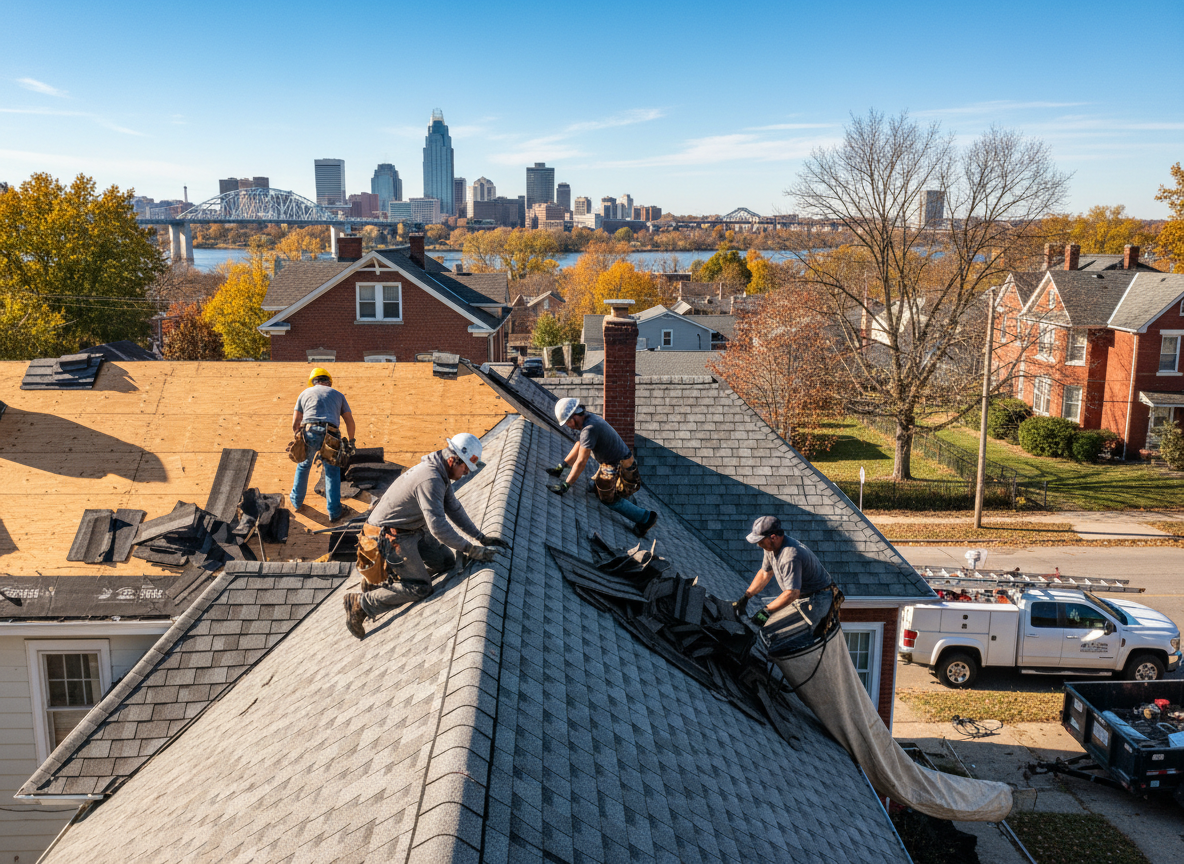
Cincinnati's housing stock in neighborhoods such as Over-the-Rhine and Mount Adams often features slate, metal, and asphalt roofs on homes built before 1950. These older structures sit on sloped lots that direct heavy summer runoff toward foundations, so contractors must check flashing and underlayment at valleys and eaves more carefully than in flatter suburbs. Hot, humid summers accelerate granule loss on asphalt shingles and cause metal panels to expand and contract daily, which loosens fasteners over time.
Downtown Cincinnati and Hyde Park properties frequently sit near the Ohio River or in the Mill Creek valley, where humidity stays high and sudden thunderstorms drop large hail. Roofing contractors in my area routinely replace impact-damaged shingles on two-story brick homes while protecting surrounding mature trees and narrow driveways that limit equipment access. Work in these areas also requires coordination with Hamilton County permit rules for historic districts when visible rooflines change.
Norwood and Newport homes share the same humid subtropical pattern, with intense July heat followed by freeze-thaw cycles that open seams in older flashing. Contractors here inspect attic ventilation first because poor airflow turns minor leaks into widespread deck rot under the hot roof surface. Replacing a roof on these homes often means staging materials on the street because rear alleys are too tight for dumpsters.
Technician insight
In Cincinnati, the thing that catches most people out with roofing contractors in my area is how quickly summer heat and humidity break down underlayment on pre-1950 homes in Over-the-Rhine and Mount Adams. Homeowners often skip checking attic ventilation until a small leak has already rotted the decking along the eaves.
Hyde Park Two-Story Leak
Heavy July storms sent water under loose flashing on a 1920s brick home. We found rotted decking along the valley that standard inspections from the ground missed. New underlayment, ice-and-water shield, and matching asphalt shingles restored the roof before the next heat wave.
How it works
- 1
Site Assessment
Walk the roof and attic to note existing materials, slope, and any prior repairs visible from streets in Over-the-Rhine or Hyde Park.
- 2
Material and Code Review
Match new roofing to Hamilton County requirements and neighborhood guidelines while accounting for summer heat expansion.
- 3
Preparation and Tear-Off
Protect landscaping and remove old layers, checking decking condition on older Cincinnati brick homes.
- 4
Installation and Final Walk
Install new roof with proper ventilation and flashing, then review drainage paths around the property.
Pricing
Upfront quotes based on roof size, pitch, and material choice after on-site review.