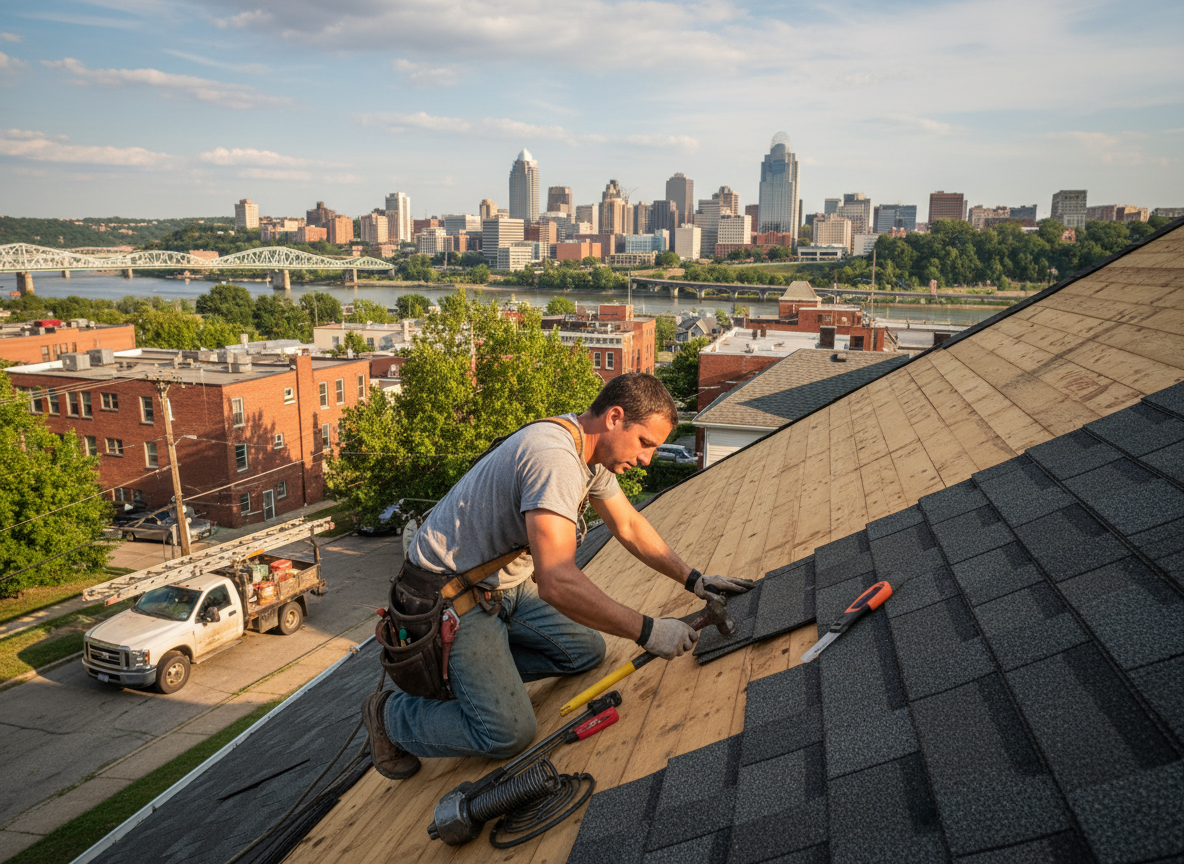
Cincinnati's humid subtropical climate brings hot summers and frequent heavy rains that accelerate wear on asphalt shingles and older slate roofs found throughout Hyde Park, Mount Adams and Over-the-Rhine. Homes built before 1950 often feature steep pitches and layered roofing that trap moisture, leading to rot in decking and fascia boards. Roof repair here requires checking for ice dam remnants from winter and ensuring flashing around chimneys and valleys remains watertight against summer downpours.
In neighborhoods like Downtown Cincinnati and near Findlay Market, narrow lots and shared walls mean repair crews must protect adjacent properties while working at height. High winds from storms can lift edges on older asphalt, allowing water intrusion that shows first as ceiling stains. Servexa Systems inspects attic ventilation and insulation levels because poor airflow in these older structures turns small punctures into widespread mold issues within weeks of a rain event.
Repairs near Great American Ball Park and in Norwood or Newport often involve coordinating with tight parking and historic district guidelines that limit visible material changes. Matching existing slate or tile requires sourcing from regional suppliers rather than big-box stock. Crews carry extra underlayment and drip edge to address the soil movement common on hillsides in Hamilton County that shifts foundations slightly over decades.
Technician insight
In Cincinnati, the thing that catches most people out with Roof repair is how our older slate roofs in Over-the-Rhine hide water under the tiles after a single heavy summer storm; the leak travels along the underlayment for weeks before showing inside, so skipping a full attic check always leads to callbacks.
Hidden Leak on Hyde Park Slope
Homeowner noticed ceiling stains after July rains. Inspection revealed lifted slate and rotted decking on a north-facing pitch. Crew replaced underlayment, reset matching slate and added new step flashing. No further leaks appeared after the next storm cycle.
How it works
- 1
On-Site Assessment
Technician climbs and examines every slope, valley and penetration for active leaks, damaged underlayment and flashing failures.
- 2
Material and Code Check
Identify existing roofing type and confirm any Hamilton County permit requirements before starting work.
- 3
Targeted Repair
Replace compromised sections, reseal flashing and restore ventilation paths without disturbing sound areas of the roof.
- 4
Final Walk-Through
Homeowner reviews the repaired sections and receives photos documenting before and after conditions.
Pricing
Upfront quotes provided after inspection; final price depends on roof pitch, material type and extent of hidden damage.