2026-10-23 · Tom Harlan
Spotting Early Roof Leaks in Humid Cincinnati Summers
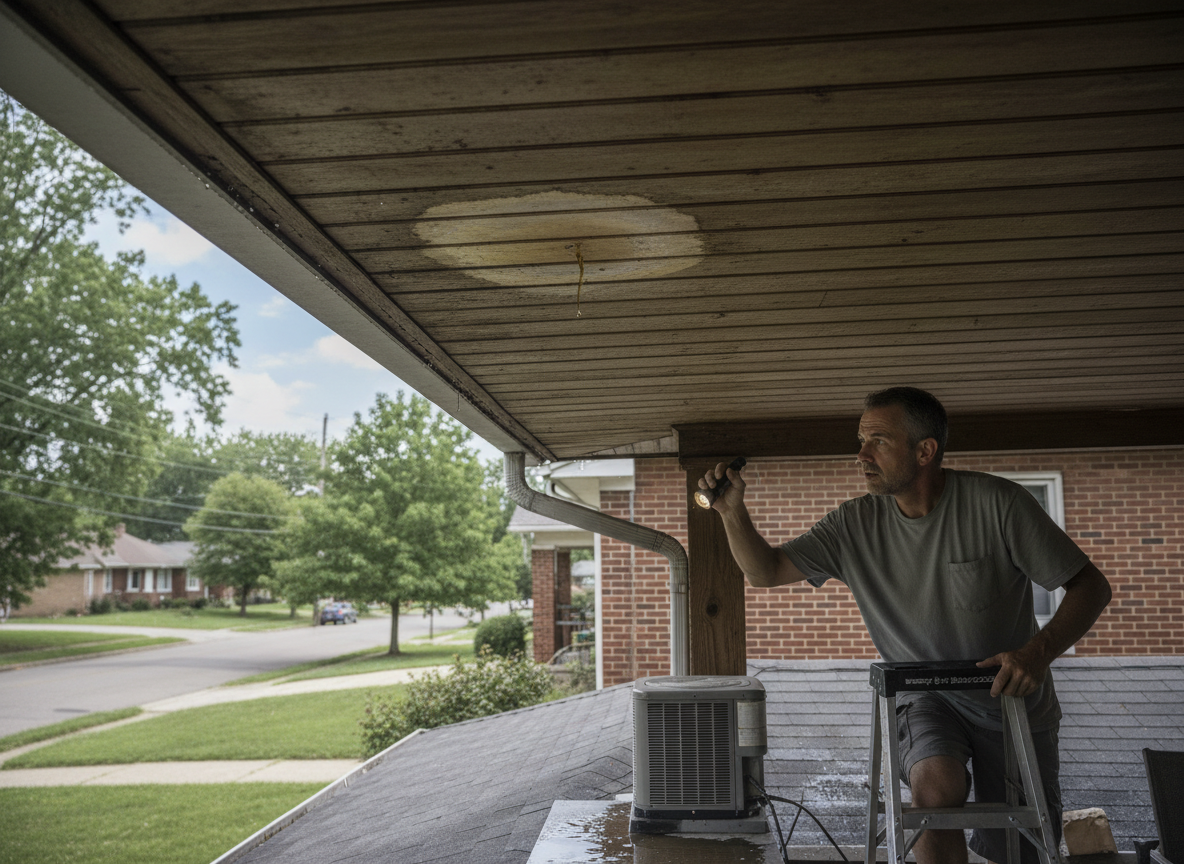
Early roof leaks in humid Cincinnati summers often appear first as small water stains or musty odors in attics within 48 to 72 hours after heavy rain, especially when daytime highs push past 85 degrees and humidity stays above 70 percent. These conditions cause shingles and underlayment to expand and contract rapidly, allowing water to seep through tiny gaps before visible damage spreads. Homeowners in Over-the-Rhine and Hyde Park see this pattern frequently because many houses date to the early 1900s with original slate or asphalt layers that have already endured decades of Ohio River Valley moisture cycles.
How Humid Summers Accelerate Leak Formation
Cincinnati’s humid subtropical climate creates a cycle where hot afternoons drive moisture upward through roof decks while evening cooling traps condensation beneath shingles. In neighborhoods such as Mount Adams and Norwood, this daily swing loosens flashing around chimneys and skylights faster than in drier regions. Older homes near Findlay Market often have limited attic ventilation, so trapped humidity softens wood sheathing and lets leaks migrate along rafters before reaching interior ceilings. Checking for these signs right after the first string of 90-degree days helps catch issues while repairs stay limited to small sections rather than full replacements.
Visible and Hidden Indicators to Check
Walk the attic on a clear morning and look for dark streaks along rafters or insulation that feels damp even when no rain has fallen in days. Pay attention to areas above kitchens and bathrooms where plumbing vents penetrate the roof, a common entry point in Hyde Park bungalows. Outside, scan for curled shingle edges or granules collecting in gutters near Great American Ball Park, which signal underlayment breakdown accelerated by summer heat. If you notice any of these, schedule a professional inspection through roof inspection services before the next thunderstorm arrives.
Why Local Terrain and Housing Stock Matter
Hamilton County’s rolling hills and narrow streets in Mount Adams create microclimates where afternoon sun beats directly on south-facing slopes, drying one side while the shaded north side stays damp. This uneven exposure speeds sealant failure around vents in homes built before 1950. Nearby Newport sees similar patterns because river humidity drifts inland. Checking twice during peak summer months catches leaks that would otherwise travel down walls and damage plaster ceilings common in Over-the-Rhine row houses.
Next Steps After Spotting Early Signs
Document any stains with photos and note the date and weather conditions to share with a roofing specialist. Avoid climbing onto hot shingles yourself; instead contact leaky roof fix teams that operate 24/7 from their base at 1621 Dana Ave. For deeper context on storm-related issues that often follow humid periods, review Checking for Storm Damage After Ohio River Valley Thunderstorms. Acting within the first week of discovery keeps most repairs under localized fixes rather than requiring broader work across Cincinnati neighborhoods.